

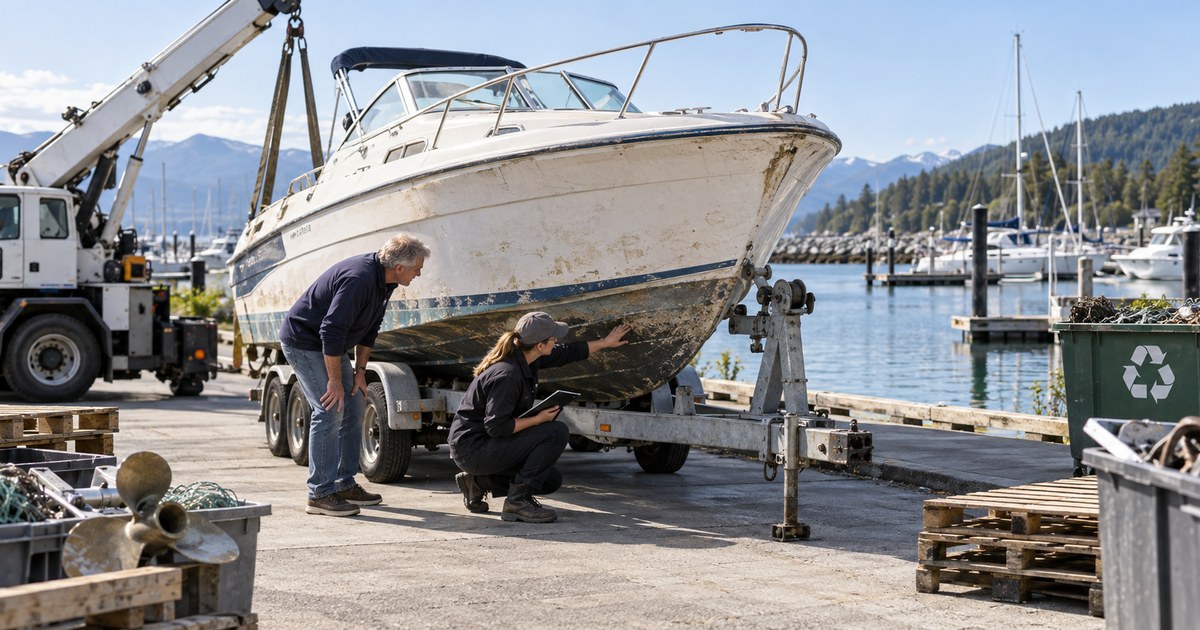
An unused boat does not sit quietly. It racks up storage fees, insurance, registration and maintenance whether anyone uses it or not, and the longer it sits the more it costs to keep. For a business that has one tied up in its assets, the useful question is not whether to get rid of it but how to do it without paying a yard to haul it away. Several routes genuinely cost nothing, and one of them can put money back through a tax deduction.
Free Boat Removal Options for Business Owners
The most straightforward route is a boat donation program. Charitable organizations accept vessels and handle the towing and paperwork themselves, so the owner pays nothing and does not have to arrange a haul-out. Free Boat Removal Options of this kind cover the pickup and the processing, which keeps the whole thing off your staff's plate. Because the boat goes to a recognized charity, the transfer can also qualify as a charitable contribution rather than a straight disposal.
The condition of the boat matters less than owners expect. Donation programs routinely take vessels that no longer run, since many of them are dismantled for usable parts and materials rather than resold whole. That makes donation realistic for boats that have been sitting long enough that a buyer would be hard to find.
Selling is the alternative most owners try first, and it is worth attempting when the boat runs and has a current survey. But a sale falls apart quickly on an older vessel: buyers want a sea trial, a haul-out inspection and a price well under what the owner remembers paying. Each month that search drags on, the storage and insurance bills continue. If a realistic listing draws no serious offer, moving straight to a donation or recycling program stops that spending instead of extending it.
Recycling programs are the other no-cost path. Local and regional initiatives take old vessels apart and recover the metal, fittings and other materials instead of sending the hull to a landfill. Handing a boat to one of these programs gets it off the books and puts the materials back into use, which is worth stating plainly when the business reports on how it disposes of its assets.
What a Donation Is Actually Worth at Tax Time
A donated boat can be deducted, but only inside the rules the IRS sets for noncash contributions, and the deduction is often smaller than the boat's market value. When a charity sells the vessel, the donor's deduction is generally limited to what the charity received for it, not to an appraised value. Getting this wrong is the expensive version of the process, so it is worth reading the IRS guidelines on charitable contributions before assuming a number.
Three things decide whether the deduction holds up:
- The organization must be a qualified charity. A receipt from a group that is not recognized does not support a deduction.
- The paperwork has to match the amount. Larger deductions need a written acknowledgement from the charity, and past a threshold they need a qualified appraisal attached to the return.
- The timing matters. The deduction belongs to the tax year in which the charity takes possession, so a boat collected in December and one collected in January land in different returns.
Have the company's accountant review the documentation before it is filed. The saving only counts if it survives a question about it later.
Disposing of the Boat Without Sending It to a Landfill
Boats are awkward to throw away. A fiberglass hull does not break down, and many landfills will not take one, which is exactly why abandoned boats end up sinking or being dumped. Programs built to take vessels apart avoid that. They pull off engines, hardware and metal for recycling and deal with the fluids and batteries that cannot simply be drained onto the ground.
The Environmental Protection Agency treats boat disposal as part of the wider marine debris and vessel-recycling problem, and its sustainability guidance is the reference point for which materials from a dismantled boat can be recovered and which have to be handled as waste. Choosing a program that follows those rules means the disposal does not create a separate environmental liability for the business.
Ask any program you approach two things: where the hull and the recovered materials actually end up, and whether you receive written confirmation that the title has transferred. That confirmation is what proves the boat is no longer yours.
It is also worth knowing what the boat is made of, because that decides which program will take it. Fiberglass hulls are the difficult case: the material has little resale value and has to be cut up and sent to a specialist recycler or used as filler, so fewer programs accept them. Aluminum and steel hulls are the easy case, since the metal is worth recovering and yards will often collect them readily. An outboard or stern drive in working order is usually worth more than the hull it hangs on, and pulling it off to sell separately before the boat goes can recover real money from a vessel that otherwise brings in nothing.
Check the Local Rules Before Anyone Moves the Boat
Moving a boat, even to give it away, runs through local and state rules, and skipping them can turn a free removal into a fine. What applies depends on where the boat sits.
- Title and registration. Most states require the title to be signed over and the registration closed out. A boat that stays registered in the business's name keeps the liability with the business.
- Lien check. A boat used as collateral cannot be transferred until the lien is released. Confirm this before promising it to anyone.
- Transport. An oversized hull moved on a public road may need a permit, and some waterways restrict how and when a vessel can be towed out.
- Hazardous materials. Fuel, oil, coolant and batteries usually have to be removed or contained before a hauler will take the boat, and disposing of them is regulated separately.
The harbor master, marina office or state boating agency where the vessel is kept will have the list that applies locally, and many publish the free or low-cost disposal services operating in the area. Using one of those listed services is usually faster than finding a hauler independently, because they already know the permit requirements.
How to Hand the Boat Over
Whichever route fits, the sequence is the same.
- Confirm the business holds a clear title and gather the registration, any lien release and a note of the hull identification number.
- Get the removal offer in writing, including who pays for towing and what happens to the boat afterward.
- Photograph the boat and its condition on the day it is collected, and keep the charity's acknowledgement or the recycler's receipt with the tax records.
- File the title transfer and cancel the insurance and registration so the business is no longer the owner of record.
Done in that order, removing the boat costs nothing upfront, the deduction is documented well enough to claim, and the vessel is disposed of through a channel that recycles it rather than abandoning it. For a business carrying an idle boat, that is the outcome worth arranging: the asset and its carrying costs come off the books without a disposal bill attached.